Why Michigan Sidewalks Get Uneven
Tree-root upheaval, soil washout, freeze-thaw, base failure — the four real causes of Metro Detroit sidewalk damage. Plus what's fixable by leveling.
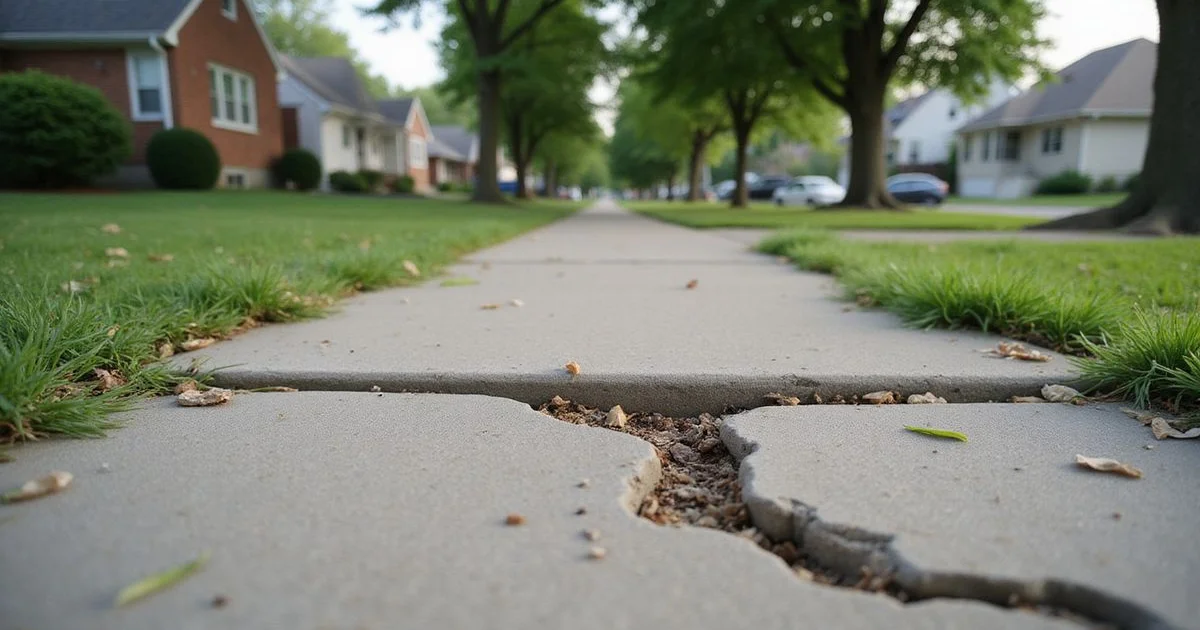
We frequently inspect sinking driveways, cracked patios, and unlevel pool decks across Metro Detroit neighborhoods.
Local weather patterns and specific soil types create a perfect storm for property damage. Our team at Concrete Leveling Detroit knows that four main issues account for nearly every tripped-over slab in the region. Understanding these uneven sidewalk causes in Michigan helps you choose a permanent fix instead of a temporary patch.
Let’s look at the data, what it is actually telling us, and explore practical ways to respond.
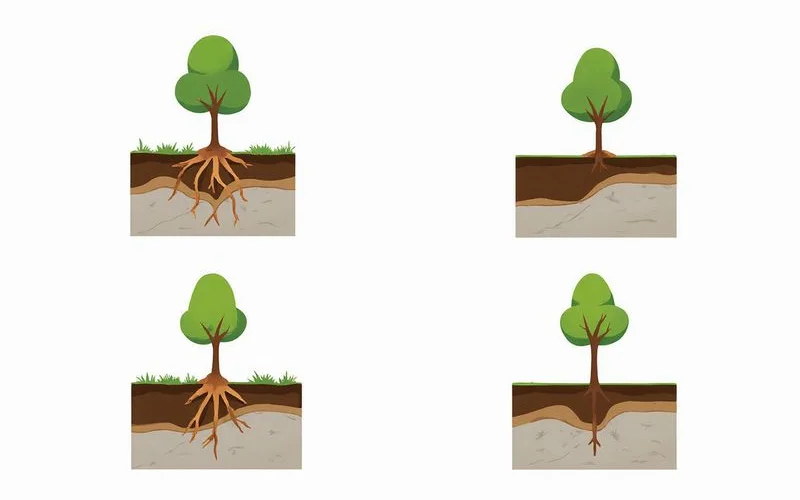
1. Tree-root upheaval
Mature trees push thick roots directly under concrete paths and driveways, lifting one slab edge while the next stays put. This creates severe tripping hazards across older blocks in Detroit, Eastpointe, and Dearborn. We see this specific tree root sidewalk damage constantly in established neighborhoods and backyard patios.
About 80% of a tree’s root system lives in the top 24 inches of soil. Fast-growing species planted decades ago simply run out of room. Our specialists frequently find that Silver Maples and Norway Maples are the biggest culprits locally.
These trees feature aggressive, shallow root systems that easily heave heavy concrete upwards. This problem is highly fixable by leveling if the underlying root is addressed first. You must handle the root through professional pruning or accommodation before we raise the adjacent slabs.
High-Risk Trees for Concrete Damage
- Silver Maples: Fast-growing but known for shallow, aggressive roots that crack walkways.
- Norway Maples: Cast dense shade and send thick roots outward that disrupt hardscapes.
- Weeping Willows: Thirsty trees that actively seek out moisture under concrete and pipes.
- Cottonwoods: Produce brittle branches and extensive surface roots that lift heavy slabs.
2. Soil washout from drainage
Improper drainage quickly washes away the supporting sub-soil beneath your concrete slabs. A single leaking sprinkler or misplaced downspout dumps hundreds of gallons of water next to a walkway during a heavy rainstorm. We regularly fix slabs where the edges have clearly dropped in the direction of the water source.
The Detroit area features poorly drained sandy loam soils, recently classified by the USDA as Livonia and Midtown soil types. Water pools easily on these specific soils instead of soaking in deeply. Our leveling process solves this exact problem by filling the hidden voids left behind by the washed-out dirt.
You can prevent future issues by extending your downspouts at least three to four feet away from any concrete surface. We highly recommend fixing any negative landscaping grades before requesting a leveling quote.
Common Sources of Soil Washout
- Short Downspouts: Discharging roof water directly against the concrete edge.
- Broken Sprinkler Heads: Underground leaks that slowly erode the base material.
- Negative Grading: Landscaping that slopes down into the walkway instead of away from it.
- Clogged Gutters: Rainwater spilling over the sides and pounding the soil below.
3. Freeze-thaw expansion and contraction
Michigan weather forces your walkways through a brutal cycle of expansion and contraction every single winter. Water seeps into unsealed concrete joints, freezes solid, and expands by about 9% in volume. We know that this incredible pressure forces the joint open wider with each passing freeze.
Data from the Great Lakes Integrated Sciences and Assessments (GLISA) shows this region averages 42 freeze-thaw cycles annually. The ice eventually melts, and the resulting water washes out the weakened sub-soil below. Our repair crews notice that it only takes three or four harsh winters before a slab settles visibly.
The resulting damage usually shows up as crumbling edges and wide, open gaps between the concrete panels. We fix this damage through a combination of precision leveling and professional joint sealing. Sealing the joints is a mandatory step to stop water intrusion and break the destructive cycle entirely.
The Freeze-Thaw Damage Cycle
| Stage | Action | Resulting Damage |
|---|---|---|
| 1. Intrusion | Melting snow enters unsealed joints. | Water sits directly on the sub-base. |
| 2. Freezing | Temperatures drop below 32°F. | Ice expands by 9%, pushing slabs apart. |
| 3. Thawing | Ice melts during daytime hours. | Sub-soil turns to mud and washes away. |
| 4. Settling | The concrete loses its foundation. | The heavy slab cracks and drops downward. |
4. Sub-base failure
Inadequate original compaction is a hidden defect that ruins perfectly good concrete decades after pouring. Many neighborhoods built during the 1950s to 1980s housing boom sit on heavy clay subgrades. We often find that builders rushed the compaction process on these difficult soils to finish homes faster.
Clay soil naturally expands when wet and shrinks drastically during dry summer months. This constant movement leaves the heavy concrete above entirely unsupported over time. Our limestone-foam hybrid material specifically targets and corrects this type of widespread sub-base failure.
The high-density polyurethane foam injects directly into the ground to stabilize the loose soil permanently. We provide this leveling service to lift the sunken sections right back into their original position. The foam cures in just 15 minutes, allowing you to use the walkway almost immediately.
Why Clay Soils Fail
Heavy clay requires careful moisture management and intense mechanical compaction before any concrete goes down. The material turns into a soft paste during heavy spring rains. Summer droughts then bake the clay into hard, shrunken blocks that leave massive voids underground.
What uneven sidewalk causes in Michigan are not fixable by leveling
While leveling saves significant time and money, some issues require a complete tear-out. Concrete acts like a rigid sponge, and severe structural degradation cannot be reversed with foam injections. We always provide an honest assessment if your walkway is simply too far gone for leveling.
You should plan for a full concrete replacement if you notice any of the following severe conditions.
- Heavy spalling: The top layer is flaking off, leaving rough, exposed aggregate and missing chunks.
- Shattered slabs: Multiple structural cracks run straight through the steel reinforcement mesh.
- Massive roots: Tree roots that fundamentally cannot be pruned without killing a large, healthy tree.
- Severe age: Concrete poured more than 50 years ago that has lost all its structural integrity.
Identification photos
Recognizing the exact cause of your damaged walkway helps you choose the correct repair strategy. Visual clues tell a clear story about what is happening beneath the surface. We train our technicians to look for these specific directional biases and cracking patterns.
Match the damage on your property to these visual indicators.
- Tree root upheaval: One specific slab tilts sharply upward at the side closest to a nearby tree trunk.
- Soil washout: A slab edge drops noticeably down, pointing directly at a downspout or drainage source.
- Freeze-thaw: You see an open, widened joint with severe crumbling along the concrete edges.
- Base failure: The walkway shows general, widespread settling with no clear directional bias.
By understanding these common uneven sidewalk causes in Michigan, you can make an informed choice about your repair options. For more on the diagnostic side, see this guide on the signs your concrete needs leveling and read about our specific sidewalk leveling service.
Request a free estimate today to restore your property’s safety and curb appeal.
Common Questions
Quick answers from our Metro Detroit crew.
Can leveling fix tree-root upheaval?
How fast does freeze-thaw damage?
More from this topic
Cost of Sidewalk Leveling in Michigan
Real Michigan sidewalk leveling prices by job size. Residential vs. commercial factors, free assessment, no-fix-no-charge guarantee.
Are You Liable for a Sunken Sidewalk? (Michigan)
Michigan property-owner liability basics for sunken sidewalks: slip-and-fall risk, insurance implications, and why timely leveling beats settlement exposure.
Sidewalk Leveling vs. Replacement: Cost Compared
Per-linear-foot leveling vs. replacement cost, downtime, and when replacement is required (heavy spalling, municipal permits).
Have a slab to lift? Let's take a look.
Free, no-obligation on-site estimate. If we can't fix it, you don't pay.