Stop Settling Before It Sinks Your Slab
Detect and fill the voids beneath your concrete that are causing settling — the root cause, not just the symptom.
What is Void Filling?
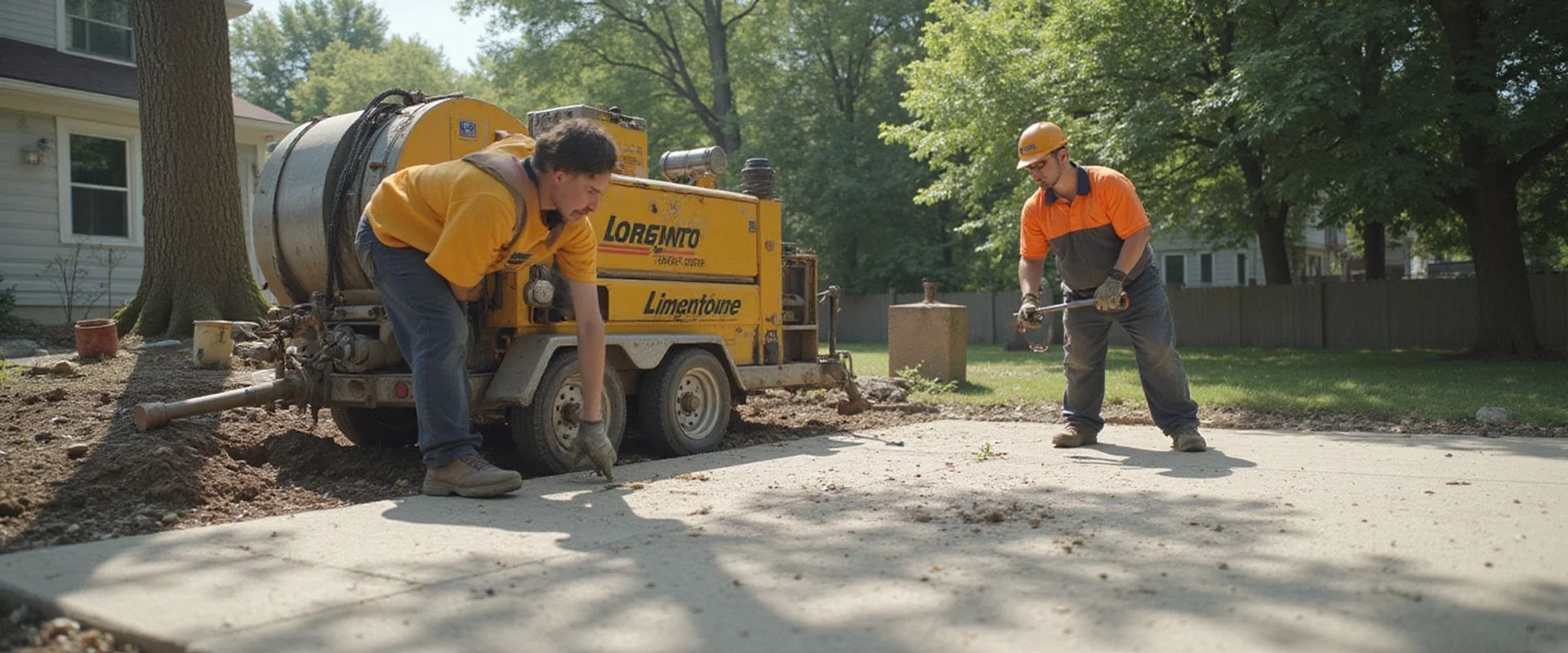
A sunken slab is a symptom; the void beneath is the cause. We inspect for voids using probing and visual techniques, fill them with our limestone-and-foam mix, and stabilize the underlying sub-soil so the slab doesn't sink again. Often paired with leveling work.
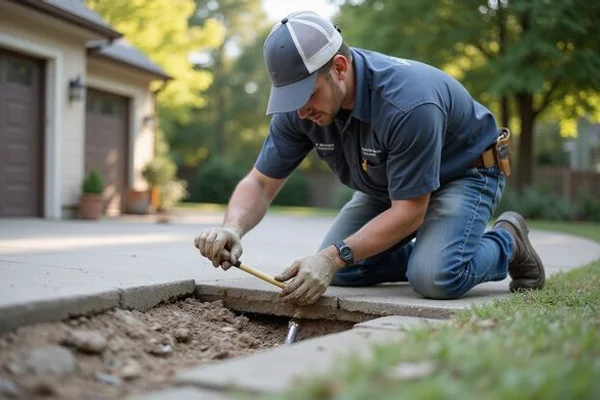
Have you noticed a hollow sound when you walk across your patio, or a pooling puddle near your driveway?
That unsettling dip in your concrete is a common headache for Michigan homeowners.
We completely understand how frustrating it is to watch your beautiful surfaces crack and sink.
Professional void filling & soil stabilization gets right to the root of the problem.
Our team sees this exact scenario play out every single week.
I will show you exactly how this process works and why it saves you a massive headache down the road.
Symptom vs. cause
A sunken slab is just the visible symptom.
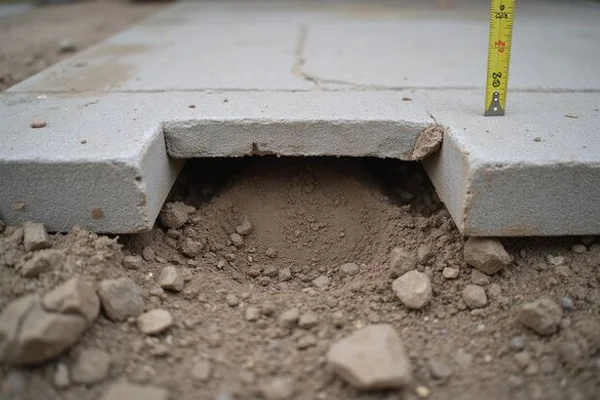
The empty void hiding beneath the surface is the actual cause.
We often see contractors treat only the symptom by lifting the slab without addressing the hollow space underneath.
This quick fix gives you a few years of stability before the heavy concrete settles right back into that same gap.
Our crew inspects for voids on every single leveling job.
Filling these cavities is a mandatory part of the restoration work.
We look for three specific warning signs that tell us a void is forming:
- Pooling water: Puddles gathering at the very edges of your slab after a heavy rainstorm.
- Hollow sounds: A distinct echoing thud when you drop an object or walk across the driveway.
- Visible gaps: Small tunnels or washouts near the soil line right where the concrete ends.
Stand-alone void filling is available for areas where the slab itself is perfectly sound but the sub-base is washing out.
Why Michigan voids form
Michigan weather is notoriously tough on residential concrete.
We see four specific culprits causing the majority of the damage in our area.
Let’s look at the main reasons your sub-base might be disappearing:
- Soil washout: Slow leaks from downspouts, sprinkler systems, or pools wash sub-soil out from under the slab. Just one faulty gutter downspout can wash away cubic yards of dirt over a single rainy season.
- Freeze-thaw cycle: Water under the slab freezes, expands, and then contracts when it thaws. The Michigan frost line drops 42 inches deep, leaving a massive void each time the winter ice melts.
- Hydrostatic pressure: Lake-side and high-water-table communities like St. Clair Shores and Harrison Township face unique challenges. Groundwater pressure constantly pushes and pulls the heavy, clay-rich soil beneath your driveway.
- Tree-root upheaval and settlement: Roots push from below, the surrounding soil settles, and your heavy slab ends up resting on a partial void.
Finding the specific cause dictates how the repair should be handled.
For more on the underlying physics, see our what are voids under concrete guide, how void filling stops future settling, and why concrete sinks in Michigan.
What our limestone-foam mix does for voids
Contractors need specialized materials to fix this exact issue properly.
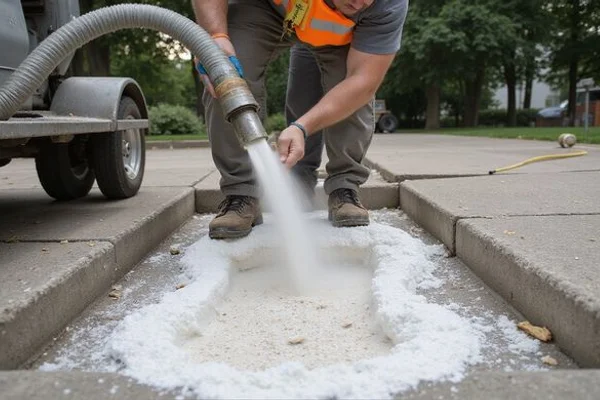
The same Michigan-exclusive hybrid we use for slab-jacking is what we pump right into these empty voids.
Our mixture utilizes 100% crushed limestone stabilized with high-density polyurethane foam.
This combination provides three massive benefits for residential applications:
- Feather-light weight: Polyurethane foam weighs an incredibly light 2 to 4 pounds per cubic foot.
- Extreme density: Traditional mudjacking slurry weighs well over 100 pounds per cubic foot, which adds unnecessary stress to already weak soil.
- Water resistance: Dense limestone completely resists washout from heavy spring rains.
We rely on this specific formulation to ensure a permanent repair.
The expanding foam easily fills tiny irregularities that a standard slurry alone would naturally miss.
Your concrete instantly regains its full load-bearing capacity once this combined fill cures.
Pricing
Cost is usually the first question on every homeowner’s mind.
We want to be completely transparent about what you can expect to pay.
Stand-alone void filling typically runs $400 to $3,000 depending on the void size, slab type, and accessibility.
Our estimates always break these factors down clearly.
Here is a quick look at how filling compares to tearing out and replacing the concrete:
| Feature | Void Filling & Stabilization | Total Concrete Replacement |
|---|---|---|
| Average Cost | $400 - $3,000 | $5,000 - $15,000+ |
| Time to Complete | 1 to 3 hours | 3 to 7 days |
| Cure Time | 15 minutes | 24 to 48 hours |
| Landscape Damage | Zero | High |
When paired with leveling work, the void fill is often included in the primary leveling quote with no incremental charge.
We make it our primary goal to save your existing concrete and keep money in your pocket.
Reach out today to schedule a free inspection, and let us help you protect your property for the long haul.
How Void Filling works in Metro Detroit
Probe and inspect
We probe for voids under the slab and visually inspect for soil washout, hydrostatic pressure markers, and drainage failure.
Drill access ports
3/8-inch ports drilled through the slab at void locations.
Fill with limestone-foam
Our hybrid mix fills the void and stabilizes the surrounding sub-soil.
Verify and pair
Re-probe to confirm fill, then (if applicable) lift the slab back to grade in the same visit.
Recent Void Filling projects
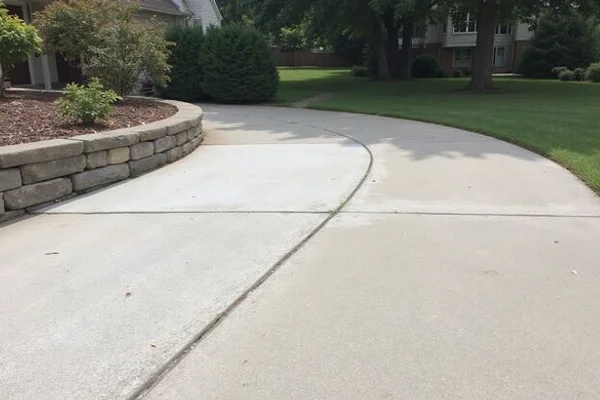
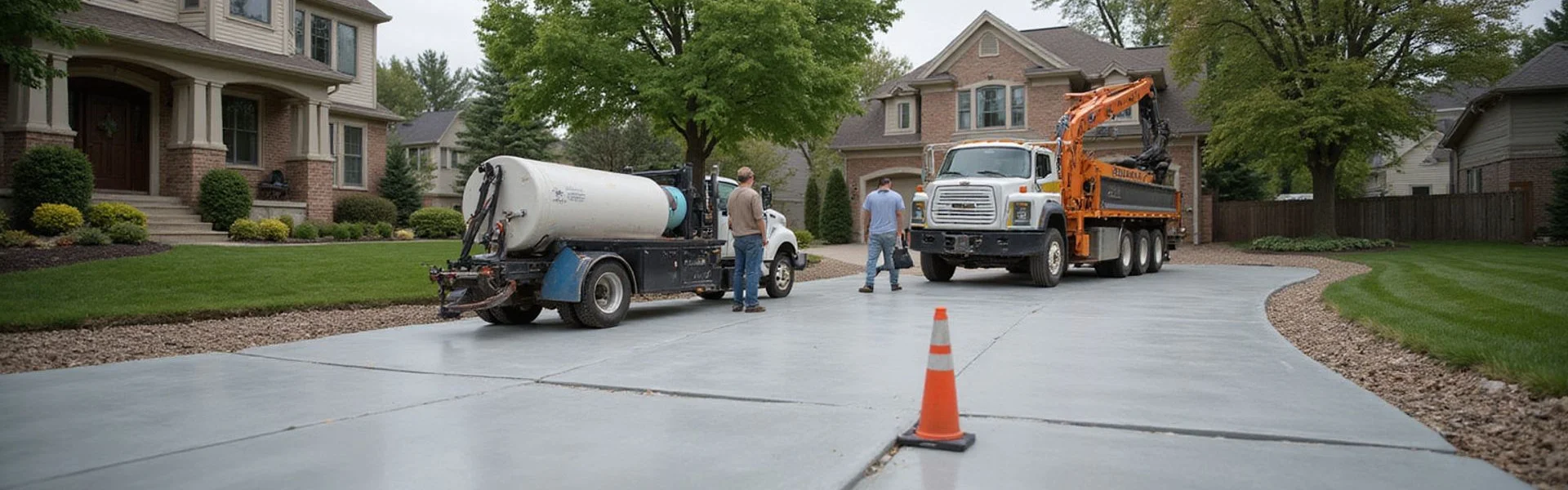
Ready for Void Filling?
Free, no-obligation on-site estimate. No Fix, No Charge guarantee.
What Metro Detroit customers say about our work.
"Armando's crew lifted our sunken driveway in Sterling Heights back to grade in one afternoon. The 3/8-inch holes were almost invisible after they patched them. Saved us close to $5,000 vs. tearing out and repouring."
"We had a real trip-hazard problem at our retail plaza in Dearborn, exposure was a worry. Their commercial team came out, gave us an honest assessment, and brought everything back into ADA spec the next weekend. No subcontractors, no surprises."
Related Services
Driveway Leveling
Raise and stabilize sunken concrete driveways in Metro Detroit using our minimally invasive slab-jacking process.
Patio & Pool Deck Leveling
Lift sunken patios and pool decks back to grade without draining the pool or tearing out concrete.
Mudjacking & Slab-Jacking
Traditional slab-jacking, upgraded. We pump 100% limestone and foam (the only crew in Michigan with this process) for heavy slabs and deep voids.
Related guides for Void Filling
How Void Filling Stops Future Settling
Inspection, fill, sub-grade compaction — the 3-step void filling process that prevents your slab from sinking again. Metro Detroit.
What Are Voids Under Concrete? Causes and Risks
How sub-slab voids form (washout, decay, settlement), why they're dangerous (collapse risk), and how we detect them — all before lifting.
Void Filling FAQ
Common questions about this service.
How do you find voids under a slab?
Why does void filling matter if I'm leveling anyway?
Is void filling included in standard leveling?
How long does void filling last?
Ready to fix your Void Filling problem?
Free on-site estimate across Wayne, Macomb, and Oakland counties. No Fix, No Charge guarantee — if we can't fix it, you don't pay.