Concrete Leveling vs. Foundation Repair
Slab leveling addresses sunken concrete; foundation repair addresses structural settlement. A clear decision tree, with honest referrals when needed.
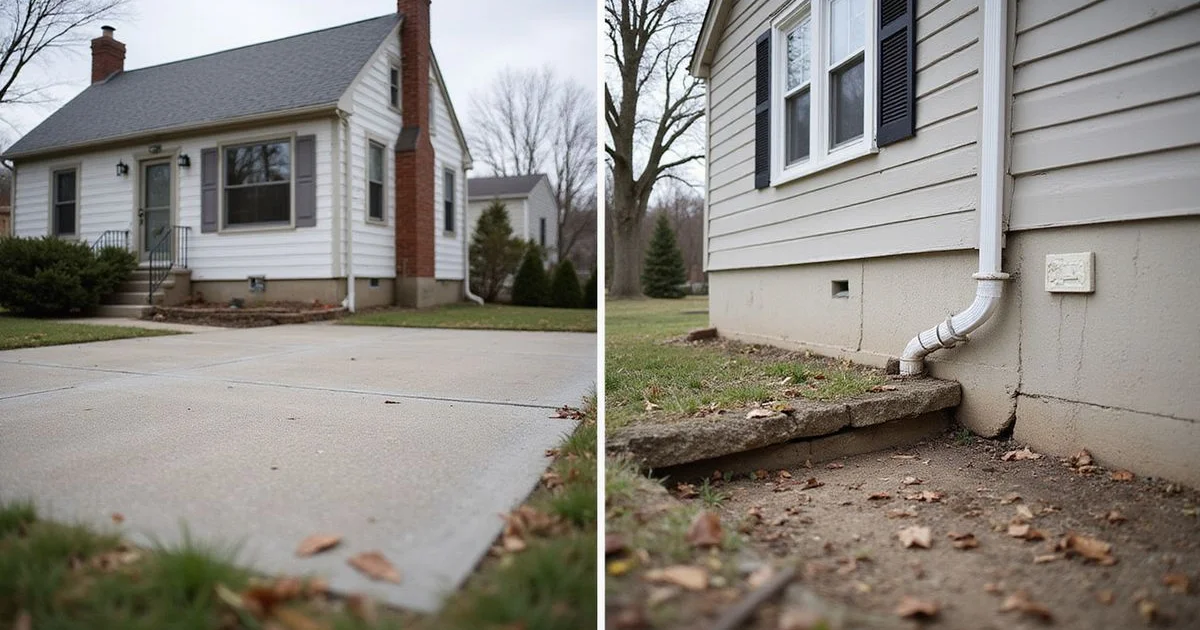
Concrete settlement and foundation failure often look identical at first glance. A 2026 Clever Offers report found that 85% of homeowners faced an unexpected repair bill last year. Our team sees this exact anxiety every single week when quoting concrete jobs.
The good news is that most sinking concrete does not require a massive structural overhaul.
Accurate diagnosis is the key to avoiding unnecessary expenses. We will walk you through the core details of concrete leveling vs foundation repair. Then, this guide will provide a clear decision tree for your specific situation.
Concrete leveling vs foundation repair: the core difference
The primary distinction comes down to weight-bearing capacity. Slab leveling fixes slab-on-grade concrete like driveways, sidewalks, patios, pool decks, and garage floors. Our focus at Concrete Leveling Detroit remains entirely on these surface slabs.
These are non-structural surfaces resting on graded sub-soil. Contractors lift these slabs using lightweight polyurethane foam injection. We see polyurethane applications keeping costs lower, typically running between $500 and $1,500.
Structural work is a different category altogether. Foundation repair addresses the actual structural foundation of a building. Our experts know these footings, walls, and piers support the entire weight of the house above them.
The Cost and Scope Difference
Fixing a foundation requires heavy-duty interventions like steel push piers or helical anchors. National 2026 data shows foundation repair costs average around $5,100. We do not perform this type of structural foundation work.
Extensive underpinning can easily exceed $15,000. Proper diagnosis prevents you from wasting money on the wrong solution. Our crew will honestly tell you on-site if your property needs foundation repair.
A simple visual inspection usually reveals the right path. You can use the same criteria to evaluate your own property.
Decision tree
We use a straightforward checklist to categorize damage. Local soil types heavily influence these symptoms. Montmorillonite clay is highly expansive and common across the US Midwest. Our technicians frequently see this cycle create localized voids under surface concrete. This clay expands during wet seasons and shrinks during dry spells. Frost heave can penetrate 42 to 48 inches deep during winter. We recommend checking your property for these specific indicators when you ask, do I need foundation repair.
Here is the breakdown for surface slab issues. These problems require a concrete leveling specialist. Our services cover all of these non-structural concerns.
Slab issue (call us):
- Sunken driveway, sidewalk, patio, or pool deck
- Garage floor sloping the wrong way
- Trip hazards at slab joints
- Pooling water on slabs
Structural problems present entirely different symptoms. A foundation contractor must evaluate these major warning signs. We always defer to structural engineers for these specific issues.
Foundation issue (call a foundation contractor):
- Doors and windows sticking inside the home
- Diagonal cracks appearing in drywall corners
- Deep cracks forming in basement walls
- Floors visibly sloping inside the house
- Chimneys leaning away from the main structure
Sometimes a property suffers from both conditions simultaneously. Deep soil movement affects the house and the surrounding flatwork. Our team handles the surface work after the main structure is secure.
Both might be needed:
- Slab settling combined with wall cracks suggests severe soil displacement
- Foundation specialists must diagnose and stabilize the building first
- Surface leveling resolves the tripping hazards afterward
Why the confusion exists
Both issues originate from the exact same underlying cause. Settlement of the sub-soil creates instability across the entire property. Our specialists frequently explain the mechanics of hydrostatic pressure to homeowners.
Heavy rainfall saturates poor-draining soil and pushes against underground structures. This pressure eventually subsides and leaves empty voids behind. We see these voids cause different types of damage depending on their location.
A sunken driveway settling on its own clay sub-soil remains an isolated slab issue. A foundation wall cracking from footing settlement represents a major structural failure. Our perspective is that the symptoms look identical to an untrained eye.
Concrete moves in both scenarios. The solutions are completely distinct and cannot be swapped. We often hear stories of homeowners trying to hire mudjacking companies to fix structural basement walls.
This is a dangerous and costly mistake. Pumping foam or mud under a foundation footing will not provide permanent structural lift.
Our crews know that piering a foundation will not lift a sunken driveway either. Each problem requires a specialized toolset. Proper assessment guarantees you get the right fix.
Examples of mis-diagnosed jobs
We encounter misdiagnosed projects on a weekly basis. Homeowners often guess wrong about the source of their concrete damage. Commercial property managers make the same assumptions. Our team prefers to share real examples to clarify these differences.
Garage Floor Failure
A homeowner recently called about a severely sloping garage floor. Diagonal cracks were spreading across the surrounding brick walls. We recommended a full structural inspection before touching the concrete. Slab leveling alone would have failed within months. The exterior walls needed heavy steel piers to stop the movement. Our decision saved the customer from paying for a useless repair.
Commercial Walkway Settlement
A property manager requested help with a sunken commercial walkway. The building foundation was perfectly intact and stable. We leveled the concrete using high-density polyurethane foam. This modern foam weighs only two to four pounds per cubic foot. Traditional mudjacking slurry weighs over 100 pounds per cubic foot. Our lightweight solution restored the walkway without overburdening the soil.
Sunken Pool Deck
A pool owner noticed massive gaps under their concrete deck. Soil washout near the coping caused the heavy slabs to drop. We inspected the area and confirmed the pool wall was completely undamaged. This was a classic surface issue with zero structural impact. The surrounding property did not require any deep excavation. Our crew lifted the deck back to its original height in just a few hours. You avoid major disruptions when the issue is isolated. Fast repairs keep water from creating worse problems.
When BOTH are needed
We occasionally see properties that require both specialized services. This dual-repair scenario usually happens on older homes with severe settlement. The adjoining slabs drop right alongside the failing foundation. Our process requires a very specific sequence of events for these complex jobs.
The Two-Step Restoration Process
A structural contractor must install push piers or helical anchors first. These deep foundation supports can take several days to install. We lift the adjacent sinking slabs only after the main building is stabilized. Lifting concrete before securing the foundation is completely ineffective. The newly leveled slabs will simply sink again when the building shifts. Our final step involves sealing all the concrete joints to prevent future water infiltration.
Coordination between the two service providers is absolutely critical. The two distinct trades do not conflict with each other. We gladly communicate with your structural contractor to manage timing and site access.
Service Comparison Breakdown
Understanding the difference in scope helps you manage your budget. Structural work involves heavy equipment and significant excavation. Our experts often explain the benefits of slab leveling vs piering for surface issues. The table below outlines the core differences between the two projects. You can see how the timelines and costs vary dramatically. We always aim to provide transparent expectations for any property repair.
| Service Type | Average Cost (2026) | Installation Method | Typical Timeline |
|---|---|---|---|
| Foundation Repair | $5,100 - $15,000+ | Steel push piers, helical anchors, underpinning | 3 to 7 days |
| Concrete Leveling | $500 - $1,500 | Polyurethane foam injection, targeted slab lifting | 2 to 4 hours |
These figures give you a realistic starting point for your research. Homeowners can find more details in the signs your concrete needs leveling guide and the deep dive on why concrete sinks in Michigan. Our goal is to equip you with as much knowledge as possible.
What we’ll tell you on-site
Honesty is the most important tool in this industry. A 2026 industry report revealed that 85% of American homeowners faced unexpected home repair costs this year. We refuse to add to that financial stress by recommending the wrong service.
Pushing surface leveling for a failing foundation is unethical. Your property needs an accurate diagnosis right from the start.
Our estimators will walk your property and listen closely to your symptoms. The inspection process reveals exactly what is happening beneath the concrete. You receive a completely transparent assessment of the damage.
We gladly provide referrals to trusted local foundation contractors if your home requires structural support. Getting the right fix for concrete leveling vs foundation repair starts with a professional evaluation. Take the first step toward restoring your property today.
Our team is ready to review your project. You can request a free estimate to begin the diagnosis.
Common Questions
Quick answers from our Metro Detroit crew.
Do you do foundation piering?
How do I know which I need?
More from this topic
How Much Does Concrete Leveling Cost in Michigan?
Real Michigan concrete leveling prices by slab type and depth. See what drives cost, how it compares to replacement, and our no-fix-no-charge guarantee.
Concrete Leveling vs. Replacement: Which Is Right?
Compare concrete leveling vs. full replacement: cost, downtime, and when each makes sense in Metro Detroit. Honest guidance, no upsell.
How Concrete Leveling Works: The Process Explained
Detroit's 4-step concrete leveling process: assess, drill 3/8-inch ports, inject limestone-foam, patch. Same-day return-to-use, no demolition.
Have a slab to lift? Let's take a look.
Free, no-obligation on-site estimate. If we can't fix it, you don't pay.