Why Limestone Slab-Jacking Suits Michigan Soils
Michigan clay behavior, hydrostatic pressure, freeze-thaw resilience — why our limestone-foam hybrid outperforms traditional mudjacking locally.
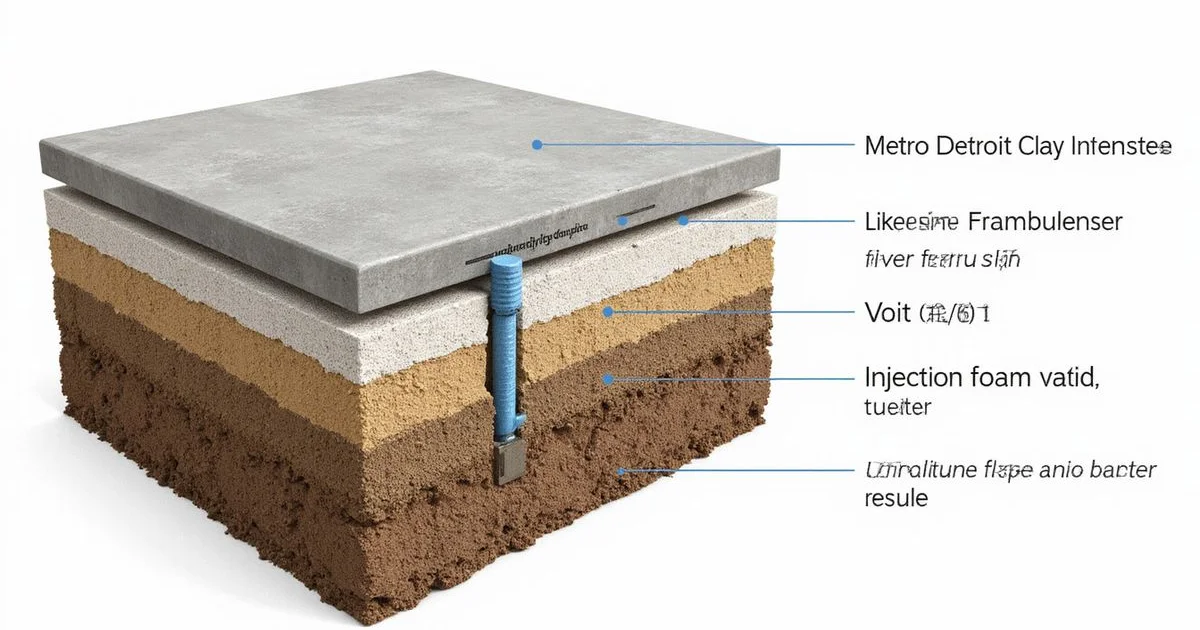
You know that sinking feeling when you spot your patio starting to crack or pitch back at the foundation.
Many homeowners assume a full concrete tear-out is required.
Our team at Concrete Leveling Detroit finds that concrete leveling saves 50% to 70% compared to typical $10 to $28 per square foot replacement costs in 2026.
Catching the damage early makes all the difference.
Most of Wayne, Macomb, and Oakland counties sit on a tricky, clay-heavy sub-soil.
We developed our specialized foam hybrid because using limestone for michigan clay provides a permanent fix.
Let’s look at the data behind soil behavior and explore how to fix your sinking slabs permanently.
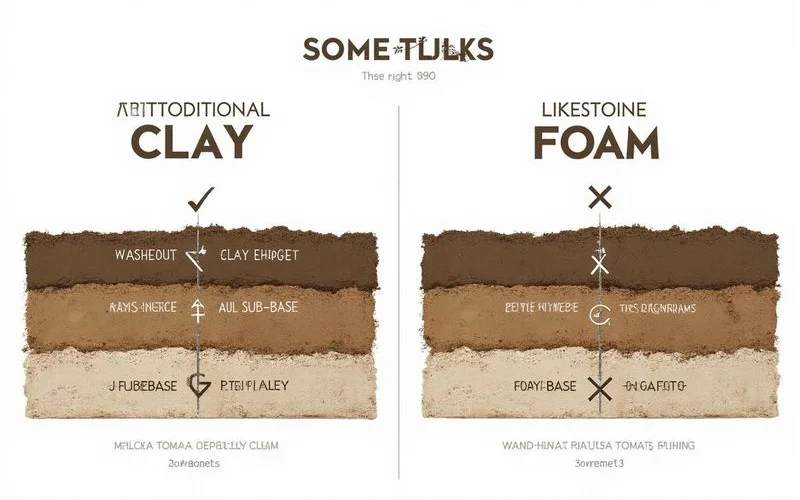
Michigan clay-heavy soil behavior: slab jacking for clay soil
Dense clay soil acts like a massive sponge beneath your concrete, retaining water for weeks and physically moving the slab.
This constant swelling and shrinking destroys unsupported driveways and pool decks.
Our crews see this soil dynamic cause severe structural shifting throughout Southeast Michigan.
A 2025 soil analysis of Macomb County confirmed that clay-rich terrain expands dramatically during heavy rains.
The ground then contracts tightly during dry spells, leaving empty pockets behind.
We combat two specific behaviors that make this ground terrible for flatwork:
- Swelling and shrinking: Repeated seasonal cycles slowly heave and drop the slab.
- Erosion during saturation: Fine clay particles wash out poorly during heavy storms, creating deep voids.
- Amplified seasonal stress: Michigan’s wet-dry cycle accelerates both of these destructive actions.
A lack of proper drainage makes these issues much worse.
Checking your gutter downspouts can prevent a lot of this rapid soil erosion.
Our technicians always look for standing water near sinking walkways.
Proper slab jacking requires a completely different approach to handle this soil.
Hydrostatic pressure
Hydrostatic pressure happens when groundwater pushes up against the bottom of your concrete with immense force.
This upward water pressure quickly erodes the sub-soil and creates massive empty pockets.
Our foundation specialists frequently encounter this issue near the Rouge River watershed and lakeside communities.
Neighborhoods in St. Clair Shores and Harrison Township sit on a very high water table.
That elevated groundwater constantly presses against slabs and basement walls.
We often find that inland cities like Detroit and Warren face slightly different risks.
These inland areas experience a lower water table but still suffer from severe drainage failures.
Shrinking clay allows surface water to rush in and wash the dirt away.
| Location Profile | Primary Water Threat | Common Concrete Damage |
|---|---|---|
| Lakeside (St. Clair Shores) | High water table and groundwater pressure | Rapid sub-soil erosion and deep voids |
| Inland (Detroit, Warren) | Poor surface drainage and clay shrinkage | Localized washout around downspouts |
We use this data to determine exactly how much lifting material your property requires.
Why limestone for michigan clay resists washout
Crushed limestone provides unmatched stability because its angular particles physically interlock under heavy loads.
This creates a rock-hard matrix that water simply cannot wash away.
We utilize a 100% agricultural-grade limestone slurry to replicate the strength of natural bedrock.
Traditional soil-cement slurries weigh about 100 pounds per cubic foot but lack structural integrity in wet conditions.
The soil component in those old mixes breaks down right alongside the surrounding Michigan clay.
Our stabilized limestone-foam hybrid solves this by providing over 2,000 PSI of compressive strength.
The chemical and physical advantages
An interlocking limestone base completely changes how the ground reacts to moisture.
The stabilized matrix offers three distinct advantages over standard dirt mixes:
- Hydrostatic pressure resistance: Flowing water cannot separate the heavy, interlocked limestone particles.
- Zero clay shrinkage: Agricultural limestone does not expand or contract when the moisture level changes.
- Dimensional stability: The material holds its exact shape across decades of use.
We recommend this natural mineral approach because it adds necessary ballast to expansive soils.
The extra weight anchors the ground and prevents future heaving.
Lightweight synthetic materials sometimes fail to hold shifting dirt in place.
Freeze-thaw resilience
A cured limestone-foam hybrid completely resists freezing damage because it does not absorb water.
Without trapped moisture inside the fill, winter freezing cannot expand and crack the material.
We monitor local weather data to understand just how brutal these temperature swings can be.
A 2026 CBS News report highlighted the severity of recent winters.
A rollercoaster winter, where temperatures swing from 15 degrees to 45 degrees and back again within days, acts as a mini-jackhammer on the road.
Rapidly melting snow quickly fills any open voids with water.
Our leveling material stays perfectly stable through these aggressive freeze-thaw cycles.
When water freezes, it expands and exerts incredible pressure on surrounding surfaces.
Typical concrete repairs crack under this stress if they absorb even a small amount of rain.
We eliminate that risk by using a hydrophobic foam stabilizer that actively repels groundwater.
Winter protection for your driveway
Protecting your slabs requires keeping water out of the underlying soil entirely.
Caulk any surface cracks before the first hard freeze hits.
Our technicians apply flexible sealants to joint lines to stop ice from forming underneath.
Why traditional mudjacking michigan soil sometimes fails locally
Standard mudjacking pumps a cheap soil-cement slurry that behaves exactly like the problematic dirt already in your yard.
When reviewing mudjacking michigan soil methods, you will notice that generic soil components break down quickly.
We see homeowners forced to repeat these outdated repairs because their slab just settles again.
The original slurry recipes often rely on whatever topsoil the contractor can source locally.
That means the chemistry and physical behavior perfectly match the weak ground causing the issue.
Our team completely replaced the dirt component with 100% crushed limestone.
This creates a completely different chemical reaction and physical structure beneath the concrete.
The limestone delivers vastly superior washout resistance and permanent load-bearing strength.
We provide comprehensive resources if you want to understand why concrete sinks in Michigan or explore our modern mudjacking and slab-jacking service.
A professional evaluation gives you hard numbers on your specific property.
You can easily Request a free estimate to see exactly how much you will save.
Common Questions
Quick answers from our Metro Detroit crew.
Will the limestone wash out?
What about clay shrinkage in summer?
More from this topic
Best Applications for Slab-Jacking (Where Mudjacking Wins)
Heavy slabs, exterior driveways, deep voids — where limestone-foam slab-jacking outperforms foam alone. Plus when to choose polyjacking.
What Is Slab-Jacking? The Limestone Method Explained
Slab-jacking history, our exclusive 100% limestone-and-foam hybrid (only-in-Michigan), grout slurry vs. foam, and where each shines.
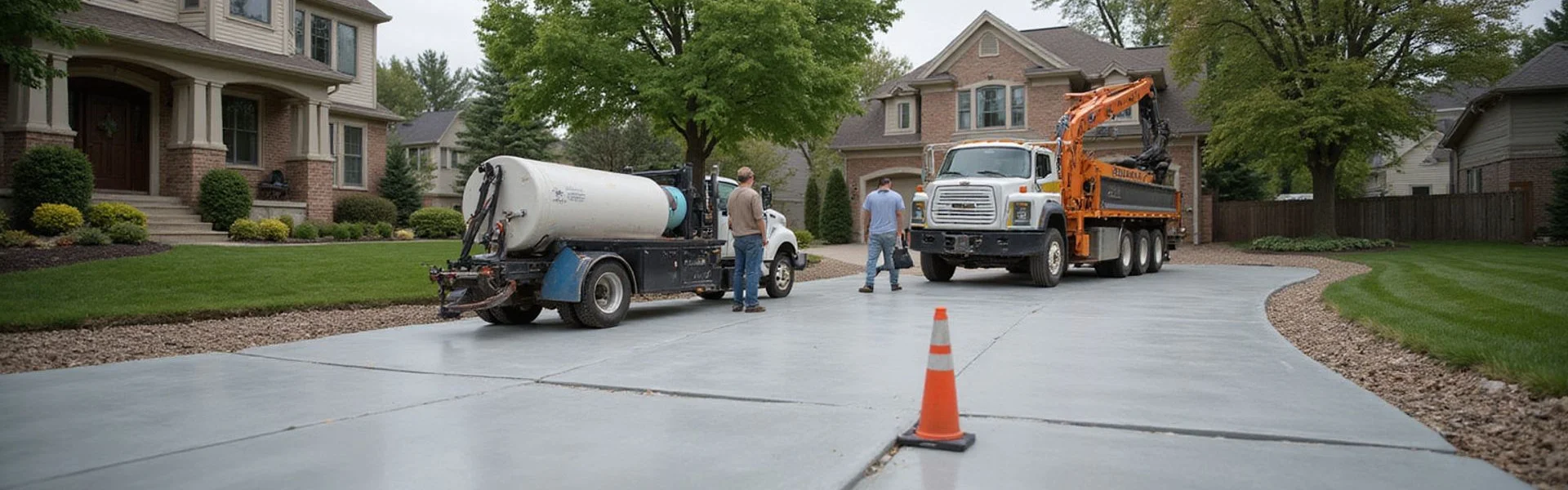
Have a slab to lift? Let's take a look.
Free, no-obligation on-site estimate. If we can't fix it, you don't pay.