How Joint Sealing Prevents Freeze-Thaw Damage
Freeze-thaw cycle physics, water infiltration, capillary action — and how flexible polyurethane joint sealant stops the damage cycle.
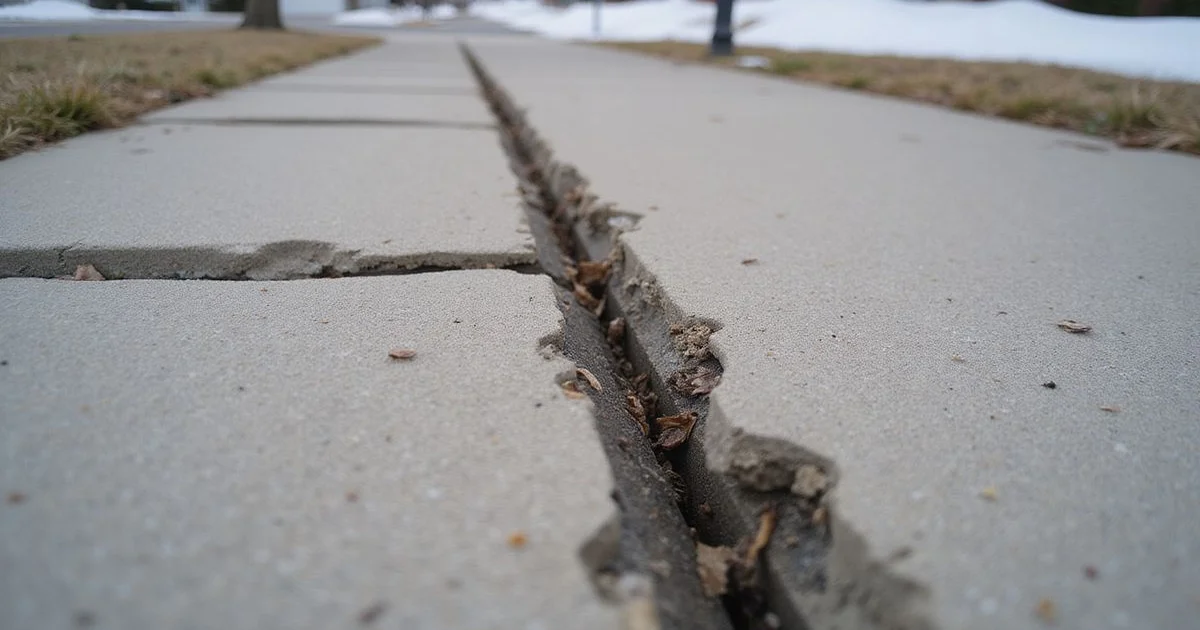
Open joints are the #1 cause of Michigan slab damage. Here’s why sealing them is the most important maintenance you can do.
You know how Michigan winters can turn a small crack in your driveway into a major problem by spring? That’s not a coincidence.
It’s the result of water getting into open concrete joints, freezing, and expanding. This relentless process is what ultimately causes slabs to heave, crack, and sink.
We see it all the time. A homeowner could have prevented a major leveling job with a simple tube of sealant a few years earlier. Sealing those joints isn’t just a cosmetic fix, it’s a structural necessity.
Here, we’ll break down exactly how this damage happens and explain why using the right professional-grade sealant is the key to stopping it.
The freeze-thaw cycle
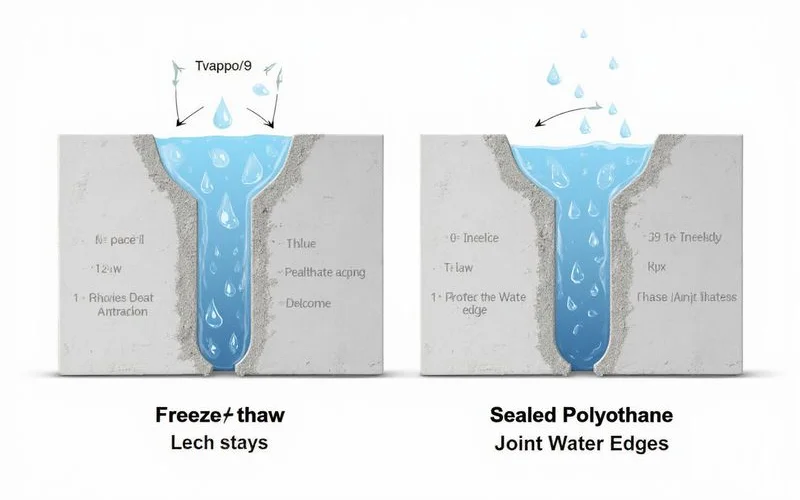
The freeze-thaw cycle is the primary reason concrete slabs in Michigan fail. The process is simple but destructive, repeating dozens of times each winter.
- Water Infiltration: Rain and snowmelt seep into unprotected joints in your driveway, patio, or sidewalk.
- Freezing and Expansion: When the temperature drops, the trapped water freezes and expands by about 9%. This expansion acts like a tiny, powerful jack, forcing the joint walls apart.
- Bond Breaking: The immense pressure cracks the concrete from within and weakens the base material under the slab.
- Thawing and Washout: As temperatures rise, the ice melts. The water then drains deeper, carrying away small particles of the sub-base, which is often the unstable clay soil common in Southeast Michigan.
- Cycle Repeats: This process repeats with every freeze, creating a larger void under the slab each time.
Over several years, enough of the sub-base washes out that the concrete slab no longer has adequate support. This loss of support is what causes it to sink and crack.
Capillary action
Even a hairline crack is a big problem for your concrete. Tiny cracks pull water deep into the slab through a process called capillary action.
Think of it like a paper towel wicking up a spill. The smaller the space, the more efficiently it draws in moisture. Concrete’s porous nature creates a network of microscopic channels that actively pull water inward, even against gravity. Once that water is inside, the destructive freeze-thaw cycle takes over.
How sealant stops the cycle
A quality, flexible polyurethane joint sealant stops the damage cycle before it can even start.
It creates a durable, watertight barrier with three key properties:
- Blocks Water: It completely blocks water and de-icing salts from entering the joint at the surface.
- Stays Flexible: It is designed to handle joint movement of +/- 25% or more, allowing it to stretch and compress as the slab expands and contracts with temperature changes.
- Long-Lasting: A professional-grade installation remains effective for over 10 years, protecting your concrete winter after winter.
When there’s no water in the joint, there can be no freeze-thaw damage. This means the soil base stays put, and your slab remains stable and level.
Optimal timing for resealing
For homeowners in Michigan, the best time to reseal concrete joints is in the fall, ideally from late September through October.
This timing is crucial for a few reasons:
- The concrete is typically at its driest after the summer heat.
- Air and surface temperatures are moderate, which is critical for proper sealant curing. Most polyurethane sealants, like those from Sika or Quikrete, require an application temperature between 40°F and 90°F.
- Sealing in the fall ensures the material is fully cured and ready to protect your concrete before the first hard freeze arrives.
A critical mistake is applying sealant to a damp or cold surface. This will prevent proper adhesion, leading to premature failure of the seal.
Why polyurethane (vs. cheap silicone)
While silicone caulk might seem like a budget-friendly option, it’s the wrong choice for concrete joints in a climate like Michigan’s. It simply can’t handle the job.
Silicone is less flexible and more prone to breaking down under UV exposure and the extreme temperature swings of winter. After just a couple of seasons, it will often crack or pull away from the concrete, allowing water to get back in.
Professional-grade polyurethane sealant, on the other hand, is specifically engineered for this work. It adheres aggressively to porous concrete and maintains its flexibility for years. Look for products that meet the ASTM C920 standard, which is the specification for high-performance elastomeric sealants designed for this exact purpose.
Here’s a quick comparison:
| Feature | Polyurethane Sealant | Standard Silicone Caulk |
|---|---|---|
| Lifespan | 10+ years | 1-5 years |
| Flexibility | High (Handles +/- 25% movement) | Low to Moderate |
| Adhesion to Concrete | Excellent | Fair |
| Best Use | Driveways, Patios, Walkways | Bathrooms, Windows (not for traffic) |
Before-and-after damage examples
The difference between a sealed and unsealed joint becomes obvious after just a few Michigan winters.
- Unsealed joint, 5 years: You’ll see an open gap, signs of soil washout underneath, and visible settling or cracking of the slab.
- Sealed joint, 5 years: The sealant bead will be intact and flexible, with no water intrusion and no damage to the surrounding concrete.
To get a better sense of the right maintenance schedule, see our guides on how often to reseal concrete joints and our professional joint sealing service.
If you see open joints in your driveway or patio, don’t wait for the damage to get worse.
Common Questions
Quick answers from our Metro Detroit crew.
When should I reseal?
Can I just caulk it myself?
More from this topic
The Concrete Caulking Process Step-by-Step
Grinding, backer-rod, polyurethane bead, cure. The 4-step concrete caulking process for Metro Detroit driveways and parking lots.
How Often Should Concrete Joints Be Resealed?
Typical 5-10 year reseal cycle. Factors that shorten it (climate, traffic), inspection checklist, and signs it's time. Free assessments.
Have a slab to lift? Let's take a look.
Free, no-obligation on-site estimate. If we can't fix it, you don't pay.